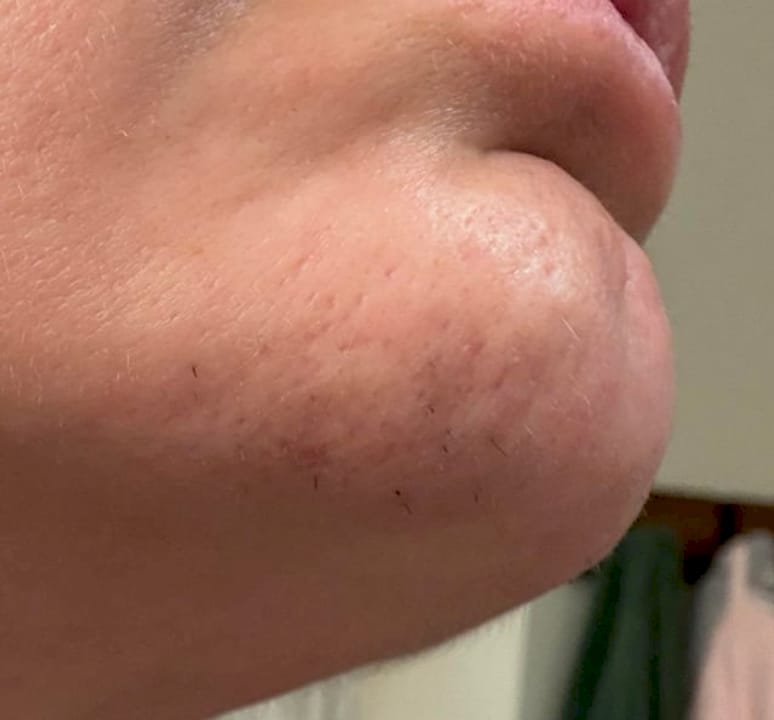
Chin hair electrolysis is the only FDA-approved method for permanent hair removal, and it works on every hair color and skin tone, including the fine, light hairs that laser treatments routinely miss. A trained electrologist inserts a fine, sterile probe into each hair follicle and delivers a small electric current that destroys the root. The follicle cannot regenerate. Most people require about 8 to 12 electrolysis sessions to achieve lasting clearance, though hormonal factors like PCOS or menopause can prompt new follicles to develop over time, requiring periodic maintenance.
Key facts before you book:
-
Electrolysis works on all hair colors, including blonde, gray, and red chin hairs that laser cannot target
-
Each follicle is treated individually, so coarse chin hair electrolysis takes more time than fine hair
-
Upper lip electrolysis and mustache electrolysis follow the same follicle-by-follicle method
-
Nipple hair electrolysis and areola electrolysis use identical technique, just on more sensitive skin
-
Hormonal hair requires ongoing sessions as new follicles emerge, not a single course of treatment
-
Only a licensed electrologist using sterile, disposable probes should perform the procedure
Pro Tip: Ask any clinic upfront whether they use single-use, disposable probes. Reusable probes that are not properly sterilized between clients are the fastest route to infection and the clearest sign to walk out.
Which New York electrolysis clinics specialize in chin hair removal?
Twelve verified providers serve New Jersey clients seeking permanent facial hair removal. Credentials, specializations, and client focus vary considerably across them.
Moon Electrolysis serves the New Jersey area from its New York base, specializing in permanent hair removal for diverse skin tones, hormonal chin hair, and clients who have not found results elsewhere Skin Deep Electrology and StudioMD are thinner on publicly listed credentials; both offer electrolysis as part of a broader service menu and suit clients who want a general aesthetics clinic rather than a dedicated electrolysis specialist.
How do you choose the right electrolysis provider for chin hair?
Certification is the first filter. Look for a Certified Professional Electrologist (CPE) credential and confirm the provider holds a current New Jersey state license. Membership in the American Electrology Association signals that a practitioner follows professional standards and pursues continuing education.
Beyond credentials, ask these questions at your consultation:
-
What electrolysis modality do you use: galvanic, thermolysis, or blend?
-
Do you use single-use, disposable probes for every client?
-
How do you customize treatment for hormonal chin hair or PCOS-related growth?
-
What does a typical session cost, and how long will each appointment run?
-
Can you show before-and-after results for clients with my hair color and skin tone?
Red flags worth walking away from: practitioners who cannot produce a license number, clinics that promise permanent results in one or two sessions, and any provider who reuses probes or cannot explain their sterilization protocol. Instant-result claims ignore the reality that hair grows in cycles and multiple sessions are always required.
Pro Tip: Before your first appointment, stop waxing, tweezing, and threading for at least 2 to 3 weeks. The probe must reach an intact follicle to destroy it. Distorted follicles from recent tweezing reduce treatment accuracy.
Prioritize providers who offer a free or low-cost consultation. That first meeting tells you a lot: how thoroughly they assess your skin type, whether they ask about your hormonal history, and whether they explain the process clearly before asking for payment.
What actually happens during a chin electrolysis session?
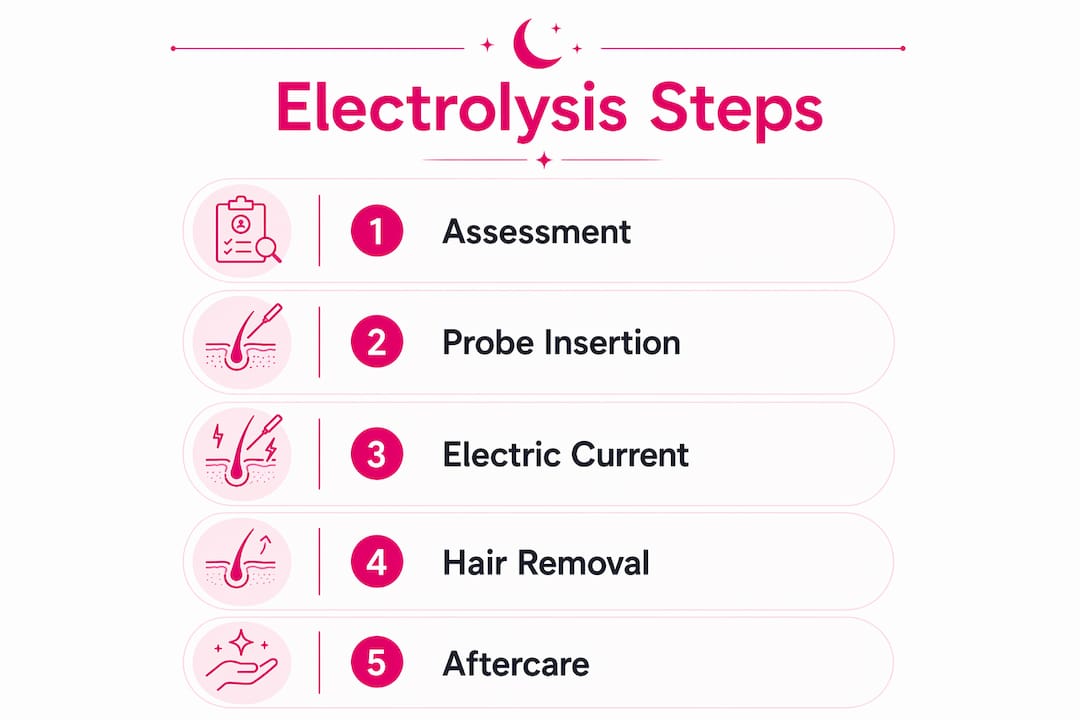
The appointment starts with a brief skin and hair assessment. Your electrologist examines the chin area, notes hair density and texture, and confirms your preparation (no recent tweezing or waxing). Then the work begins follicle by follicle.

A fine, sterile probe slides into the natural opening of each hair follicle. No skin puncture occurs. A small electric current travels down the probe to the follicle base, destroying the growth cells. The sensation is typically mild discomfort or a brief tingling, not sharp pain. Session length ranges from 15 minutes to one hour depending on the area and hair density.
After the session, expect redness and mild swelling. These resolve within one to two weeks with proper aftercare. Some people see light scabbing on a few treated follicles.
Post-session do’s and don’ts:
-
Do apply a gentle, fragrance-free moisturizer to calm the skin
-
Do use SPF daily on the treated area once redness clears
-
Don’t apply makeup to the chin for the first 24–48 hours
-
Don’t take hot baths, use saunas, or exercise heavily for 48 hours
-
Don’t pick at any scabs; let them fall off naturally
Pro Tip: Early in treatment, schedule sessions every one to two weeks to catch hairs in their active growth phase. Once density drops, your electrologist will space appointments to every three to six weeks. Trying to rush that spacing early on extends your total treatment time.
Why does electrolysis work better for hormonal chin hair than other methods?
Hormonal chin hair, driven by androgens from conditions like PCOS or menopause, is a moving target. New follicles can activate as hormone levels shift, which means the hair problem is not static. Electrolysis destroys each follicle permanently, but it cannot prevent the body from activating new ones. That distinction shapes everything about how you should approach treatment.
Laser hair removal struggles with this population for two reasons. First, laser targets pigment, so it performs poorly on light, fine, or gray chin hairs that are common in hormonal cases. Second, even successfully treated follicles can be replaced by newly activated ones. Electrolysis, by contrast, works on all hair colors and destroys each follicle completely, making it the only method that can keep pace with hormonal hair as it appears.
Key points for anyone managing hormonally driven chin hair:
-
View electrolysis as an ongoing management protocol, not a one-time fix
-
New follicle activation from PCOS or menopause requires periodic maintenance sessions
-
Personalized treatment plans that account for your hormonal history produce better outcomes than standardized protocols
-
Providers like Ariyah Electrolysis and Albanese Electrolysis Studio specifically address PCOS-related and hormonal hair growth
Moon Electrolysis: certified permanent chin hair removal
Moon Electrolysis operates from midtown Manhattan and serves clients across the New York and New Jersey area. The clinic’s certified electrologists use FDA-approved permanent removal methods and specialize in cases that other providers find difficult: hormonal chin hair, dark skin tones, transgender clients, and even tattoo hair removal.
What sets Moon Electrolysis apart from a general aesthetics clinic is its focus. Every appointment is built around electrolysis specifically, not offered as one service among many. Treatment plans are personalized to your skin type, hair characteristics, and hormonal background.
Highlights of the Moon Electrolysis approach:
-
Certified electrologists trained in all three electrolysis modalities
-
Specialization in diverse skin tones and hormonally influenced facial hair
-
Free initial consultations to assess your case before any commitment
-
Detailed educational resources explaining how electrolysis works for clients who want to understand the process
-
Modern, welcoming clinic environment designed for client comfort
Pro Tip: If you have been told laser is not an option for your chin hair because of skin tone or hair color, electrolysis is not just an alternative. It is the only method with FDA approval for permanent removal across all hair and skin types.
Moonelectrolysis serves New York clients seeking permanent results
If the New Jersey providers listed above are not the right fit, whether because of scheduling, location, or the need for a clinic that specializes exclusively in electrolysis, Moonelectrolysis offers a direct alternative.
Moonelectrolysis is a permanent hair removal clinic in midtown Manhattan, accessible from across New Jersey by train or car. Unlike multi-service spas that offer electrolysis as a side treatment, Moonelectrolysis focuses entirely on electrolysis hair removal services, with certified practitioners, personalized treatment plans, and experience across the full range of challenging cases: coarse chin hair, hormonal growth from PCOS, sensitive skin, and all skin tones. New clients start with a free consultation, so you understand exactly what your treatment plan will look like before spending anything.
Key Takeaways
Electrolysis is the only FDA-approved permanent hair removal method, making it the strongest choice for chin hair that laser cannot reliably treat.
| Point | Details |
|---|---|
| FDA-approved and permanent | Electrolysis is the only method the FDA recognizes as permanently removing hair for all skin tones and hair colors. |
| Session count | Most clients require about 8 to 12 electrolysis sessions for lasting clearance; hormonal cases require ongoing maintenance. |
| Hormonal hair needs a plan | PCOS and menopause can activate new follicles over time, so treatment is a long-term protocol, not a single course. |
| Credentials matter | Look for a CPE credential, NJ state license, and AEA membership before booking any provider. |
| Moonelectrolysis option | Moonelectrolysis serves New Jersey clients from midtown Manhattan, specializing in hormonal chin hair and diverse skin tones. |