
Electrolysis is a proven option for permanent hair removal, using controlled electrical currents to neutralise individual follicles. It is effective across hair types and skin tones and is used to achieve long-term reduction when treatments are planned to match hair growth cycles.
Three principal techniques—thermolysis, galvanic and the blend method—cover most client needs. Practitioners select the best approach based on hair texture, skin sensitivity and treatment goals.
Overview of Electrolysis Techniques
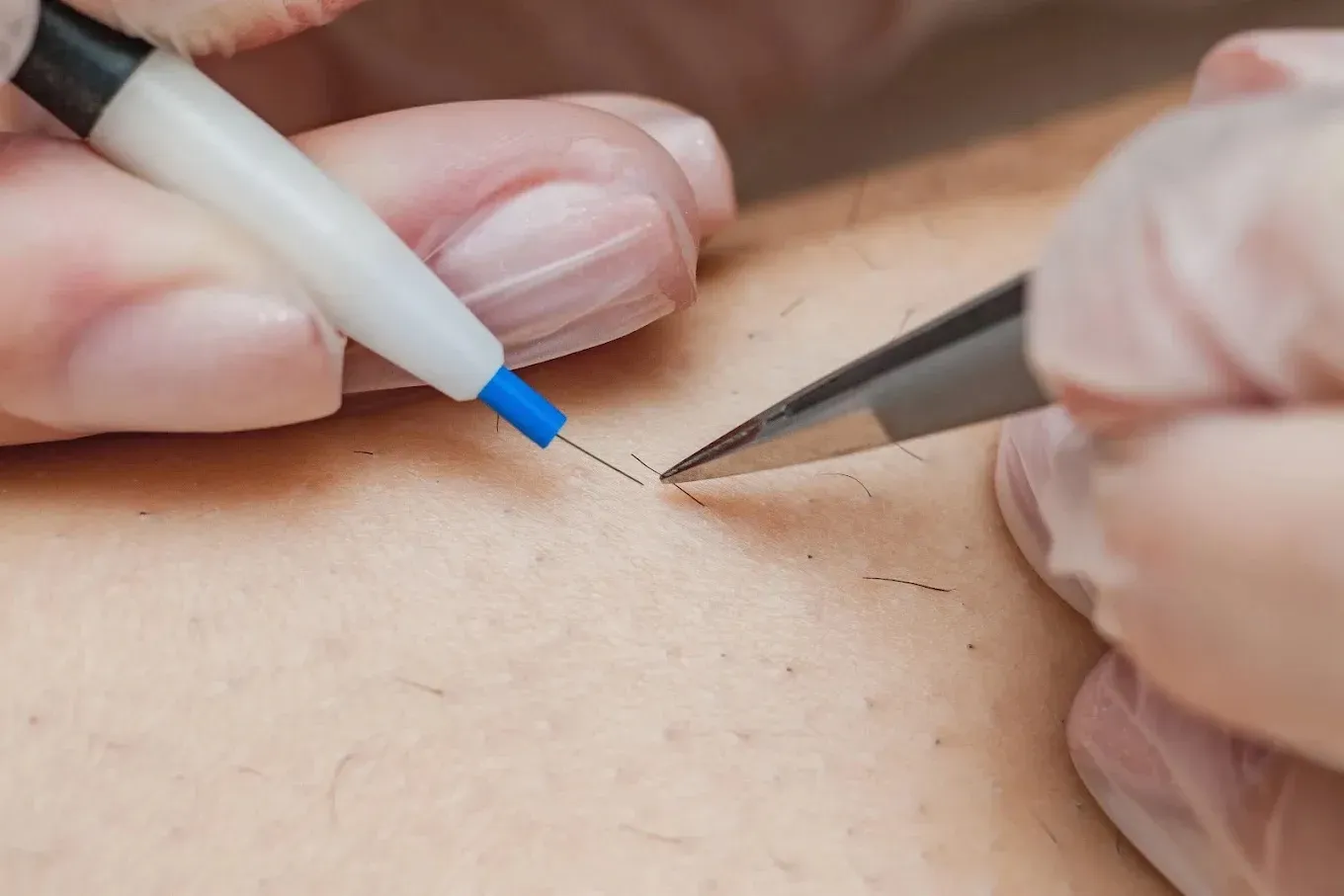
Electrolysis destroys hair follicles with electrical energy applied to each follicle. Success depends on the technique chosen and practitioner skill; the summaries below explain the mechanisms and typical use cases.
Thermolysis
Thermolysis uses high-frequency current to create controlled heat in the follicle, disabling hair-producing cells. It is fast and often preferred for fine or lighter hairs, with many sessions short in duration and well tolerated.
Galvanic
Galvanic electrolysis applies direct current to produce a chemical reaction within the follicle, destroying its ability to regrow hair. It is especially useful for coarser hair and is delivered methodically over longer sessions.
Blend Method
The blend method combines thermolysis and galvanic actions to apply both heat and chemical effects simultaneously, improving outcomes for resistant hairs and many hair types.
Best Practices for Electrolysis

Following established best practices optimises results and reduces complications. The guidance below reflects common clinical standards.
- Pre-Treatment Preparation: Hydrate, avoid recent sun or tanning products, and discuss medications that affect sensitivity.
- During Treatment Expectations: Report any discomfort so the technician can adjust settings; many devices include cooling features.
- Post-Treatment Care: Keep the area protected from sun and heat, follow aftercare instructions and use gentle skincare to support healing.
For personalised advice, consult with experts who can assess your needs and propose a tailored plan.
Potential Outcomes
Clients judge electrolysis by its effectiveness, permanence and side-effect profile. The typical outcomes below help set realistic expectations.
Effectiveness
Electrolysis is recognised as an effective permanent hair removal method across hair types; many clients see significant reduction after a course of treatments (commonly cited at around 80–90% reduction for many clients over a full treatment plan).
Permanence
Destroyed follicles generally cannot regrow hair, so electrolysis offers lasting results; complete clearance usually requires multiple sessions spaced to match growth cycles.
Side Effects
Side effects are usually short-lived and include redness or localized swelling; rare risks such as scarring or pigment change are minimised by experienced practitioners and correct aftercare.
| Technique | Mechanism of Action | Best For |
|---|---|---|
| Thermolysis | High-frequency current generates heat | Fine and light hair |
| Galvanic | Chemical reaction leads to follicle destruction | Coarse and thick hair |
| Blend Method | Combines both heat and chemical action | All hair types |
This comparison helps match technique to client needs and treatment goals.
What Are the Primary Electrolysis Techniques for Permanent Hair Removal?
The primary techniques—thermolysis, galvanic and the blend—are established, safe options when performed by a certified electrologist. Discuss hair type and priorities with your practitioner to choose the most suitable method.
How Does Galvanic Electrolysis Work and What Are Its Benefits?
Galvanic electrolysis triggers a chemical reaction in the follicle using direct current, which is effective for thicker or resistant hairs and offers precise follicle-by-follicle treatment when delivered by trained professionals.
What Is Thermolysis and When Is It Recommended?
Thermolysis uses high-frequency current to generate heat inside the follicle; it is usually recommended for fine or lighter hair and for clients seeking shorter session times.
How Do Electrolysis Techniques Compare for Safety and Efficacy?
All approved techniques have good safety profiles when administered by trained practitioners using appropriate equipment and protocols. Choose a reputable clinic with certified electrologists to reduce risk and optimise outcomes.
What Are the Advantages of the Blend Technique Compared to Others?
The blend technique combines heat and chemical action to improve efficacy for resistant hairs and can shorten total treatment time for some clients.
How Is Patient Safety Ensured During Electrolysis Procedures?
Safety relies on standardised protocols, quality equipment and practitioner training, plus clear pre- and post-care instructions to minimise complications.
What Should Clients Expect in Terms of Treatment Duration and Sessions?
Session lengths vary by area and method—typically 15 to 60 minutes—and multiple sessions are scheduled to treat hairs in successive growth phases for lasting results.
How Many Electrolysis Sessions Are Typically Required for Permanent Results?
Many clients require around 10 to 15 sessions for substantial reduction, though individual needs depend on hair type, growth cycle and the technique used.
What Factors Influence the Length and Frequency of Treatments?
Hair coarseness, growth patterns, skin sensitivity and hormonal or medical factors influence scheduling; a practitioner will personalise the regimen accordingly.
How Can Clients Access Electrolysis Services Tailored for Different Skin and Hair Types in NYC?
NYC clinics offer tailored electrolysis services—review clinic credentials, confirm practitioner certification and request a personalised assessment to find the right match.
What Specialized Electrolysis Services Are Available for Transgender Clients?
Many clinics provide inclusive, specialised protocols for transgender clients that prioritise comfort, confidentiality and outcome-driven planning. For details see specialized electrolysis services for transgender clients.
How to Schedule a Free Consultation and Appointment with a Certified Electrolysis Clinic in NYC?
Contact a certified clinic to book a complimentary consultation; a practitioner will assess concerns, outline options and propose a treatment plan.
Electrolysis provides a clinically supported approach to permanent hair removal, with technique selection and consistent treatment planning central to good outcomes.
Frequently Asked Questions
Is electrolysis painful?
Discomfort varies by person and area; many report a mild stinging or warming sensation. Modern devices and topical options can reduce pain—tell your technician if you need adjustments.
How long does it take to see results from electrolysis?
Initial reduction is often visible after a few sessions, with substantial improvement commonly after multiple treatments (often 10–15 sessions depending on hair and area).
Can electrolysis be used on all skin types?
Yes—electrolysis treats the follicle directly and is suitable for all skin colours; a pre-treatment assessment identifies sensitivities and the best technique.
What should I do to prepare for an electrolysis appointment?
Hydrate, avoid recent sun exposure and tanning products, and discuss medications with your practitioner. Attend with the area free of makeup or topical products.
Are there any contraindications for electrolysis?
Certain medical conditions can affect candidacy—consult a healthcare professional for diabetes, clotting disorders, active skin conditions, pregnancy or medication concerns; your practitioner will advise during consultation.
How much does electrolysis cost?
Costs vary by location and session length; clinics often provide package pricing and may offer discounts for multiple sessions. Ask about pricing and packages during your consultation.
Conclusion
Electrolysis offers lasting hair reduction across hair and skin types. Thermolysis, galvanic and the blend method each have clear roles; consult a certified electrologist for tailored recommendations and a professional assessment.