Electrolysis is a widely used option for permanent hair removal, often chosen to remove unwanted hair within or around tattoos. It treats individual follicles with precision to provide lasting results while protecting tattooed skin. This article summarises benefits, treatment steps, expected outcomes, safety and aftercare, and explains how to book a consultation with Moon Electrolysis in New York City.
Benefits of Electrolysis for Tattoo Hair Removal
Electrolysis is an FDA-recognised method for permanent hair reduction, delivering durable results across skin types and hair colours. Its targeted approach treats individual follicles and can reduce discomfort compared with some alternatives.
Prospective clients can request a complimentary consultation to discuss their needs and experiences with Moon Electrolysis. Information on specialised services, including electrolysis for transgender individuals, is available for transition-related care.
Procedures Involved
A consultation allows a trained electrologist to assess skin and hair and choose the best approach. Treatment uses a very fine probe and a controlled electrical current to disable the follicle. Clients receive clear aftercare instructions after each session to support healing, which is especially important for tattooed skin.
Expected Outcomes
Many clients achieve long-term hair reduction with little or no regrowth; the number and timing of sessions vary by hair growth cycle. Beyond physical results, people often report increased comfort and confidence in their skin.
Individuals seeking tailored advice are encouraged to schedule an appointment with an experienced electrologist to plan treatment that matches their goals.
What Is Electrolysis and How Does It Permanently Remove Tattoo Hair?
Electrolysis delivers electrical energy through a fine probe to destroy a follicle’s capacity for future growth. This targeted method is useful where other removal techniques are limited by tattoo pigment or specific skin considerations.
Individual patient factors, including skin tone, hair characteristics, and any pre-existing skin conditions, should inform the choice of hair removal method.
Electrolysis for Hair Removal with Tattoos
Skin colour, hair colour, density, presence of tattoos or other skin conditions, among other factors, may determine which method of epilation is most appropriate for a given patient. Any dermatologic conditions at the treatment sites should be managed and maintained to prevent post-treatment complications.Dermatologic care and permanent hair removal in preparation for genital gender affirming surgery, 2024
What Are the Safety Protocols for Electrolysis on Tattooed Skin?
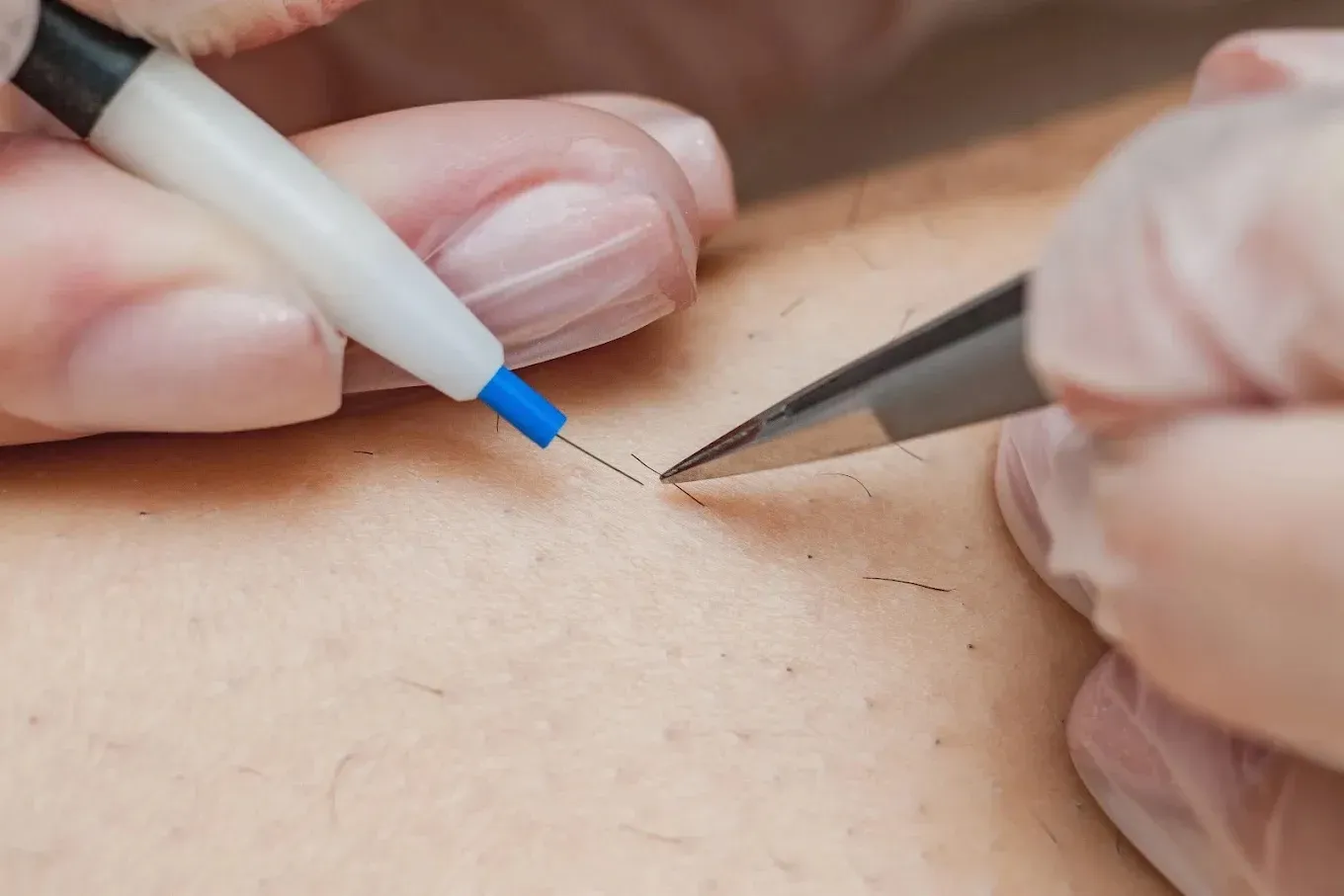
Safety is a priority. Before treatment, practitioners cleanse the area and advise avoiding sun exposure to lower complication risk. During sessions, strict hygiene and equipment protocols are followed, and clear post-treatment instructions reduce irritation and infection risk to support healing.
What Aftercare Is Recommended Following Electrolysis on Tattoo Skin?

After electrolysis, clients should follow standard aftercare measures to support recovery and optimise outcomes:
- Clean the Area: Gently cleanse the treated skin to reduce infection risk.
- Moisturize Regularly: Apply a soothing, non-irritating lotion to maintain hydration.
- Protect from Sun Exposure: Avoid direct sun and use appropriate sun protection to prevent irritation.
Following these recommendations helps maintain skin health and supports the success of treatment.
How Can You Book a Personalized Electrolysis Consultation in NYC?
To schedule a personalised consultation at Moon Electrolysis call +1 646 407 7967. The initial visit reviews goals and provides tailored guidance. Additional service details are available at Moon Electrolysis.
How Are Treatment Plans Customized for Permanent Hair Removal Needs?
Treatment plans are individualised after assessing hair type, skin condition, and client objectives. An experienced electrologist will design a regimen that accounts for hair growth cycles and treatment tolerances to achieve optimal results.
Certain follicle characteristics, such as markedly curved hair, can present specific challenges for some electrolysis techniques and should be considered during planning.
Electrolysis for Permanent Hair Removal
Thermolysis is of limited value in distorted follicles or in individuals with highly curved hair follicles, as are often observed in some skin types; the blend method may be considered.Electrolysis: observations from 13 years and 140,000 hours of experience, 1995
What Are the Typical Costs and Benefits of Electrolysis for Tattoo Hair Removal?
Session prices vary with the size and complexity of the treatment area. Although initial costs may exceed temporary methods, many clients find electrolysis cost-effective over time because results are permanent. The procedure can also improve skin appearance and reduce ingrown hairs associated with other methods.
What Are the Key Benefits of Choosing Electrolysis for Tattoo Hair Removal?
Electrolysis offers several primary benefits, including:
- Effective on All Skin Types: The method does not depend on skin pigmentation or hair colour to be effective.
- Improves Skin Health: By reducing ingrown hairs, it supports better skin condition.
- Permanent Solution: As an FDA-recognised approach to permanent hair reduction, it delivers enduring outcomes.
These factors explain why many clients select electrolysis for reliable and safe hair removal in tattooed areas.
Frequently Asked Questions
1. How can electrolysis affect the appearance of my tattoos?
Electrolysis targets follicles precisely and is designed to spare surrounding skin, so it typically does not change tattoo appearance. If you have concerns, discuss them with your electrologist, who can assess your tattoo and skin.
2. Is electrolysis suitable for all skin types?
Yes. Electrolysis works across all skin tones and hair colours because it does not rely on pigment, making it suitable for varied and sensitive treatment areas.
3. What should I do if I experience irritation after treatment?
Minor irritation is common, especially on sensitive or tattooed skin. Follow aftercare guidance—apply a soothing lotion and avoid sun exposure—and contact your electrologist if symptoms persist or worsen.
4. How long does a typical electrolysis session last?
Session length depends on the area and hair density; sessions commonly run from about 15 minutes to an hour. Your electrologist will give a precise estimate during consultation.
5. Are there any side effects associated with electrolysis?
Common side effects include temporary redness, mild swelling, or transient discomfort in the treated area. These effects are usually short-lived and respond to recommended aftercare.
6. What factors influence the total cost of electrolysis treatments?
Costs depend on treatment area size, hair density, and the number of sessions needed. Consultations often include a cost breakdown to help plan financially.
7. How often should I schedule electrolysis sessions for optimal results?
Frequency typically ranges from weekly to monthly, depending on hair growth cycles and the personalised treatment plan. Your electrologist will recommend a schedule to maximise effectiveness while fitting your routine.
Conclusion
Electrolysis is a safe, effective permanent option for hair removal in tattooed areas, suitable across skin types. To determine whether it’s right for you, arrange a personalised consultation with the experienced team at Moon Electrolysis in New York City.