Understanding Electrolysis Methods for Dark Skin

Electrolysis is a reliable, permanent hair removal method appropriate for darker skin tones. This article outlines electrolysis techniques, safety protocols, and comparisons with alternative treatments. Because darker skin is at higher risk of burns and pigmentation changes with some laser procedures, electrolysis offers a lower‑risk option while remaining effective across skin types. We explain the mechanism of action, benefits relative to laser hair removal, the typical treatment pathway, adjustments for transgender clients, and practical details on costs and scheduling in New York City.
Electrolysis is highly effective for many clients, but the optimal hair removal method depends on individual needs and clinical circumstances.
Choosing the Right Hair Removal Method for Individual Needs
Removal of unwanted hair is the most popular esthetic treatment worldwide. However, no single method of hair removal is appropriate for all patients or body locations.
Hirsutism and Hypertrichosis, 2025
What Makes Electrolysis a Safe Hair Removal Method for Dark Skin?
Electrolysis treats individual follicles with a fine probe that delivers a controlled electric current. Because the treatment is localized, adjacent skin is largely unaffected, reducing the risk of burns or pigment changes in darker skin. When performed by a qualified practitioner, electrolysis is effective across hair colors and skin tones and can produce permanent hair removal.
How Does Electrolysis Work on Different Skin Types Including Dark Skin?
A fine probe delivers a controlled electric current into the hair follicle. Practitioners adjust settings and technique for darker skin to maintain efficacy while minimizing tissue trauma. This targeted approach supports safe, optimal outcomes when performed correctly.
Understanding the basic electrical principles that underlie electrolysis helps explain why the treatment is effective and controllable.
The Fundamental Mechanism of Electrolysis Explained
The word “lysis” means to dissolve or break apart, so “electrolysis” literally refers to breaking substances apart using electricity. Michael Faraday first formulated the principle of electrolysis in 1820. The process occurs in an electrolyte, a watery solution or a molten salt that allows ions to move between two electrodes. The electrolyte connects the electrodes, which are linked to a direct current. When current is applied, positive ions migrate to the cathode and negative ions migrate to the anode. At the electrodes, cations are reduced and anions are oxidized.
Electrolysis, YT Hung, 2005
What Are the Safety Protocols for Electrolysis on Dark Skin?
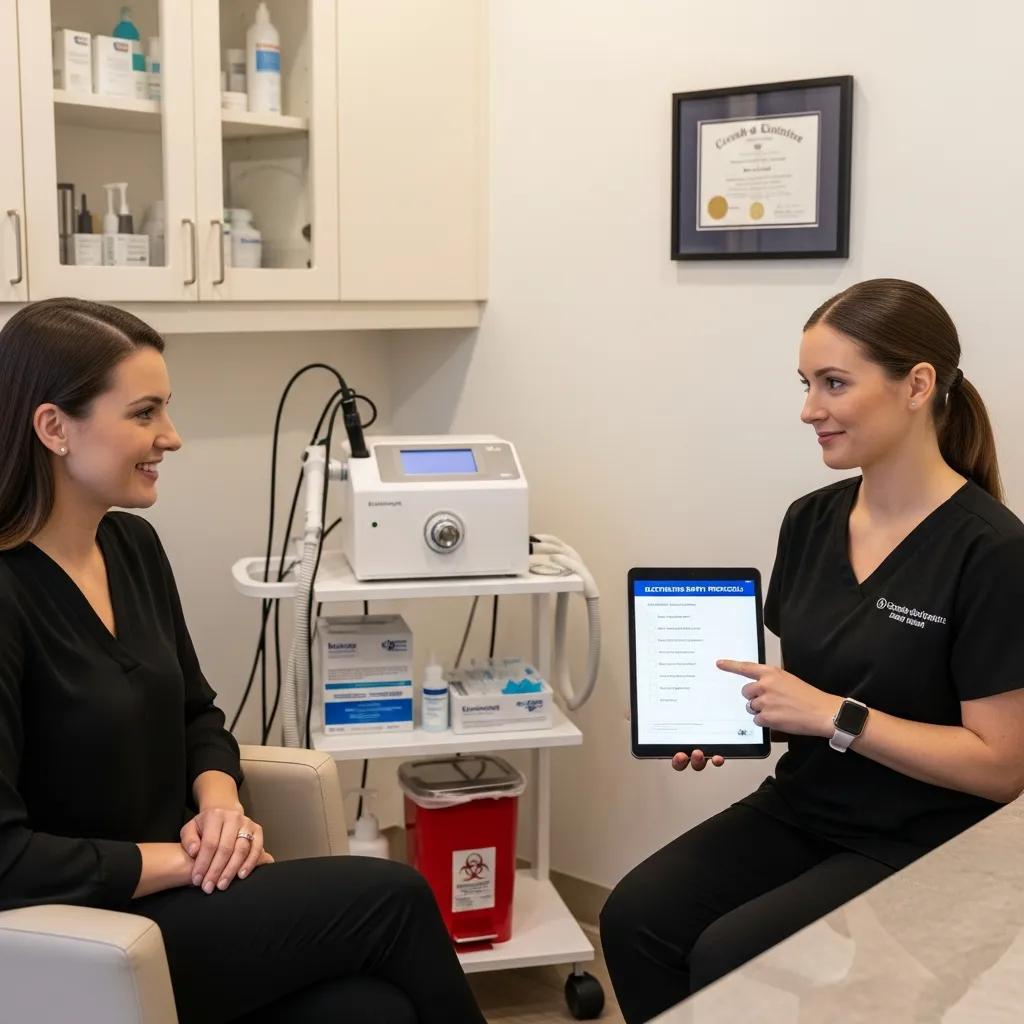
Recommended safety protocols for electrolysis on darker skin include:
- Qualified Electrologist : Ensure that the procedure is performed by a licensed electrologist who understands the unique needs of darker skin tones.
- Hygiene Standards : The clinic should maintain high hygiene standards to prevent infections and complications.
- Skin Assessment : A thorough assessment of the skin type and condition should be conducted before treatment to tailor the approach accordingly.
These measures support a safe and effective electrolysis process for darker skin tones.
A skilled, knowledgeable electrologist is essential to maintain safety and ensure treatment efficacy.
Electrolysis Safety: Importance of Skilled Practitioners
Electrolysis is not safe in unskilled hands. Negligence or insufficient understanding of skin biology, bacteriology, antisepsis, tissue tolerance, the chemical reactions involved in electrolysis, and correct apparatus use can result in serious damage.
Clinical efficacy of Electrolysis and Laser Hair Removal in PCOS patients, 2025
How Does Electrolysis Compare to Laser Hair Removal for Dark Skin?
A fair comparison requires assessment of effectiveness, safety, and permanence of results for darker skin types.
What Are the Advantages of Electrolysis Over Laser and IPL for Dark Skin?
Electrolysis offers specific advantages relative to laser and intense pulsed light (IPL) for darker skin:
- Universal Effectiveness : Electrolysis works on all hair colors and skin types, making it a versatile option.
- Permanent Results : Unlike some laser treatments that can permit regrowth, electrolysis provides a permanent solution.
- Minimal Side Effects : The risk of burns or pigmentation changes is considerably lower with electrolysis, increasing safety for darker skin tones.
These advantages make electrolysis a primary option for clients seeking permanent hair removal.
Clinical evidence supports electrolysis’s permanent results and superior efficacy compared with laser treatments across diverse skin and hair types.
Additional clinical data further support electrolysis, particularly for long‑term efficacy and suitability across skin and hair variations.
Electrolysis vs. Laser: Superior Permanent Hair Removal for All Skin Types
Electrolysis has repeatedly shown superior efficacy for permanent hair removal, particularly in hormonally sensitive facial areas for all skin types. Laser hair removal in clients with polycystic ovary syndrome was reported to cause paradoxical hair growth (paradoxical hypertrichosis). Although electrolysis required more treatment sessions, it ultimately offered a more reliable, cost-effective, and permanent solution. Based on our findings, we prioritize electrolysis over laser hair removal
Clinical efficacy of Electrolysis and Laser Hair Removal in PCOS patients, 2025
What Are the Potential Side Effects of Electrolysis Versus Laser Hair Removal?
Both electrolysis and laser hair removal may produce side effects, but their profiles differ substantially.
- Electrolysis Side Effects : Mild redness, swelling, or irritation at the treatment site, which typically resolves quickly.
- Laser Hair Removal Side Effects : Potential for burns, discoloration, or scarring, especially in individuals with darker skin.
Understanding these differences helps clients evaluate the safest and most effective option for their needs.
What Is the Electrolysis Treatment Process and Aftercare for Dark Skin?
The electrolysis treatment process follows defined steps to ensure safety and to deliver effective results.
How Many Electrolysis Sessions Are Typically Needed for Permanent Hair Removal?
Multiple sessions are normally required; the number depends on hair density and growth cycles. Many clients require 8 to 12 sessions, scheduled several weeks apart, to achieve optimal results.
What Aftercare Practices Ensure Safety and Efficacy on Dark Skin?

Appropriate aftercare is essential for safety and efficacy on darker skin. Recommended measures include:
- Avoid Sun Exposure : Protect the treated area from direct sunlight to prevent pigmentation changes.
- Keep the Area Clean : Maintain cleanliness to reduce the risk of infection.
- Moisturize : Use gentle moisturizers to soothe the skin post-treatment.
These aftercare steps support improved outcomes and promote skin health.
Careful aftercare and appropriate preparation are essential to maximise treatment efficacy and to manage responses such as post‑inflammatory hyperpigmentation.
Electrolysis Efficacy & Dark Skin Hyperpigmentation
Shaving 1 to 5 days before electrolysis greatly increases efficacy. The availability of topical anesthetics has been a major advance in reducing the sensations of electrolysis. Postinflammatory hyperpigmentation occurs commonly in persons with dark skin. This usually resolves spontaneously.
Electrolysis: observations from 13 years and 140,000 hours of experience, 1995
How Is Electrolysis Tailored for Transgender Clients with Dark Skin?
Electrolysis can be adapted to the needs of transgender clients to deliver a comfortable, effective hair removal experience.
What Personalized Electrolysis Techniques Support Transgender Hair Removal Needs?
Personalized techniques for transgender clients may include:
- Thermolysis : A method that uses heat to destroy hair follicles, suitable for various hair types.
- Galvanic Methods : Involves the use of chemical reactions to eliminate hair, effective for coarse hair.
- Blend Techniques : Combines both thermolysis and galvanic methods for enhanced results.
These tailored approaches help ensure transgender clients receive effective treatment suited to their individual needs.
How Does Moon Electrolysis Create an Inclusive Environment for Transgender Clients?
Moon Electrolysis maintains an inclusive environment for transgender clients, offering specialised services and support. The clinic assesses individual hair removal needs and delivers respectful, tailored care to improve comfort and treatment outcomes.
What Are the Costs and Appointment Scheduling Options for Electrolysis in NYC?
Understanding electrolysis costs helps prospective clients plan treatment.
How Is Electrolysis Pricing Structured for Dark Skin Treatments in NYC?
In New York City, pricing varies by treatment area and session length. Typical fees range from approximately $75 to $150 per session, depending on treatment complexity.
How Can Clients Book Consultations and Appointments Efficiently?
Clients may book consultations and appointments via the clinic website or by contacting the office directly. Moon Electrolysis provides flexible scheduling to accommodate client needs and to ensure a convenient experience.
Frequently Asked Questions
What Is the Ideal Skin Condition for Electrolysis Treatment?
For optimal results, skin should be healthy and free from infection, open wounds, or active irritation. Individuals with eczema or psoriasis should consult a healthcare provider before treatment. A thorough skin assessment by a qualified electrologist is essential to tailor the approach and to ensure safety and effectiveness.
How Does Electrolysis Affect Hair Growth Cycles?
Electrolysis targets hair follicles during the active anagen phase. Because hair grows in cycles, multiple sessions are necessary to treat all follicles. Treatments spaced several weeks apart ensure hairs are treated during their optimal growth phase for permanent removal.
Can Electrolysis Be Combined with Other Hair Removal Methods?
Electrolysis may be combined with other methods such as shaving to support treatment. Avoid waxing or plucking before sessions, as these methods remove the hair shaft and disrupt the growth cycle. Shaving 1 to 5 days before treatment is commonly recommended so the hair is present in the follicle. Consult your electrologist for personalised guidance.
What Should I Avoid After My Electrolysis Session?
After a session, avoid sun exposure, hot baths, and strenuous exercise for at least 24 hours to reduce irritation. Refrain from harsh skincare products, such as exfoliants or retinoids, on the treated area for a few days. Keep the area clean and moisturised and follow your electrologist’s aftercare instructions for optimal recovery.
How Do I Choose the Right Electrologist for My Needs?
Choose an electrologist based on qualifications, experience, and familiarity with darker skin tones. Seek licensed professionals with specialised training and positive reviews. Use the initial consultation to evaluate their communication and willingness to address your concerns. A knowledgeable electrologist will tailor the treatment to your specific needs for a safe, effective experience.
What Are the Long-Term Benefits of Electrolysis for Dark Skin?
Electrolysis offers long‑term benefits for darker skin, including permanent hair removal with minimal risk of skin damage. Unlike some laser treatments that can cause pigmentation changes, electrolysis is appropriate for all skin types and works on all hair colors. Over time, clients can expect smoother skin and reduced need for ongoing hair removal methods.
What Should I Expect During My First Electrolysis Session?
Your first session begins with a detailed consultation in which the electrologist evaluates skin type and hair growth. The practitioner will explain the treatment plan, insert a fine probe into the follicle, and deliver the electric current. Mild discomfort is possible; the electrologist will discuss pain management and provide aftercare instructions to support healing.
Is Electrolysis Painful, and How Is Discomfort Managed?
Electrolysis may produce sensations described as tingling or pinching. Many practitioners use topical anaesthetics and adjust current intensity to manage discomfort. Communicate openly with your electrologist so they can modify the treatment while maintaining efficacy.
Can Electrolysis Be Performed on Sensitive Areas of the Body?
Electrolysis can be performed safely on sensitive areas such as the face, bikini line, and underarms. Skilled electrologists use techniques and settings tailored to delicate regions to minimize discomfort and achieve effective results. A consultation will determine the optimal approach for your needs.
How Long Does Each Electrolysis Session Last?
Sessions typically last 15 to 60 minutes depending on the treatment area and the amount of hair being removed. Smaller areas require less time, while larger areas may need longer sessions. Your electrologist will provide a personalised estimate during the initial consultation.
Are There Any Contraindications for Electrolysis?
Certain conditions may contraindicate electrolysis. Individuals with skin infections, open wounds, or medical conditions such as uncontrolled diabetes or serious heart disease should consult their healthcare provider before treatment. Medications that affect skin sensitivity may require postponement. Always disclose your medical history to your electrologist to ensure a safe treatment experience.
How Can I Prepare for My Electrolysis Appointment?
Preparation includes avoiding sun exposure and tanning for at least one week before treatment to reduce skin sensitivity. Shaving the treatment area 1 to 5 days prior can improve efficacy. Avoid harsh skincare products or medications that may irritate the skin, and arrive with clean skin to facilitate treatment.
Conclusion
Electrolysis is a safe and effective option for darker skin, offering permanent results without the risks commonly associated with some laser treatments. Its follicle‑targeting approach minimises side effects and suits a range of skin types. Understanding these benefits supports informed decisions about hair removal. For a personalised consultation and to learn about our services, visit Moon Electrolysis today.
Conclusion
Electrolysis stands out as a safe, effective hair removal method for darker skin, providing permanent results while minimizing risks associated with other treatments. Its targeted approach reduces side effects, making it suitable for varied skin types. By understanding electrolysis’s benefits, individuals can make informed choices about hair removal. For a personalized consultation and to explore our services, visit Moon Electrolysis today.